


This weekend, and continuing into the beginning of the week, many online services were dysfunctional or totally inaccessible. That happened because of a DNS bug on the part of Amazon. I avoided some of the issues though thanks to the homelabbing I do, meaning my hard work has paid off more than usual.
My Services Weren’t Affected
Not surprisingly, Amazon Prime went offline thanks to the outage. HBO Max did as well, not to mention everyone’s favorite ad platform, Roku. I honestly didn’t even notice because these days, I do almost all of my movie and TV show streaming with my Jellyfin media server. Since I host it myself, there are no ads and, crucially, no third party servers that can bring it down.
Apple Music and Tidal were also down, and fortunately for me, Jellyfin also supports audio playback. I’ve uploaded my entire music collection so I can stream it from wherever I am, and it doesn’t matter what the status of Amazon’s US-EAST-1 is. I use the Fintunes app on my phone to get a similar experience to that of Tidal or Spotify.
While Microsoft Office 365 was down, my local Nextcloud service was still up. I primarily use it for cloud storage, but it has plugins to allow for collaborative office productivity too.
Zoom was down as well, and while I don’t run Jitsi myself, I’m involved in some projects that rely on it for video conferencing. It’s a security-focused replacement for Zoom and Google Meet that you can host yourself.
Of Course, I Have My Own Downtime
After all the boasting about hosting I just did, I’m going to eat some humble pie. I won’t pretend that I, unlike Amazon, never have services go offline. They do, and probably with more frequency than Amazon. In these cases, at least, I’m relatively in control of the situation. It gets fixed when I’m ready and able to fix it.
The benefit is sort of like the benefit of being your own plumber instead of relying on a plumbing service to fix an issue. If you have the right plumbing skills and tools, you can fix issues as they come up. If you use a plumbing service, at the mercy of their availability. At least if my services go down, I’m fairly confident I can fix it on my own time.
It’s Also Not for Everyone
I’m not one of those homelabbers who proclaiming that every individual on this planet should host all of their own online services. I believe that no more than I believe that every individual should be their own plumber, to continue the analogy. Neither does everyone need to be a skilled carpenter and landscaper. A community of individuals coming together to support each other with their varying skills and resources is far better than a bunch of overwhelmed individuals indepedently repeating each other’s work.
As much as I can, I share my online services with folks around me. That way, they can reap the benefits without needing to become as tech-savvy as me. Similarly, I have friends who are good cooks, so I fortunately can enjoy good food without needing to become a chef myself.
I’m Now More Motivated to Expand
Of course, some third party online services I do rely on were affected by the Amazon outage. Ultimately, though, that just made me more sure I should further build out my homelab.
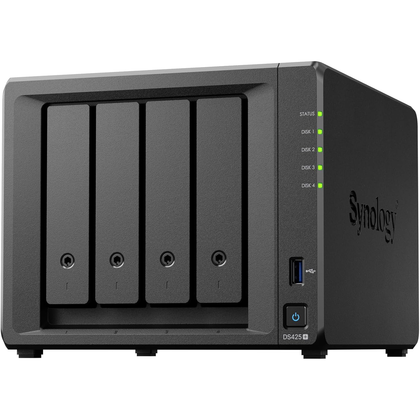
Synology DS425+

- Brand
-
Synology
- CPU
-
Intel Celeron J4125
This four-bay NAS works great for home and small office use, including easy homelabbing, and it comes with a three-year warranty from Synology.
- Memory
-
2GB DDR4 non-ECC
- Drive Bays
-
4
- Expansion
-
N/A
- Ports
-
1 x 2.5GbE LAN, 1 x 1GbE LAN, 2 x USB 3.2 Gen 1 Type-A
- Caching
-
2 x M.2 NVMe
- OS
-
DiskStation Manager
- Dimensions
-
8.78″D x 7.83″W x 6.54″H
- Weight
-
4.81 pounds
Some replacements I haven’t made yet include chat apps. Signal was affected, and unfortunately I don’t have a fallback solution in place yet, so I couldn’t reach some folks how I normally would. Self-hosted alternatives exist, though, like Rocket.Chat as Slack or Discord replacement and IRC servers like Ergo.
I also don’t have a substitute for Asana’s task management. A TaskTrove instance might be in my future now that this AWS debacle has come to pass.
You can see a lot of choices at a glance in all kinds of software genres at the Selfh.st website. I find it a valuable resource when I’m trying to find self-hostable alternatives to specific services that may go indefinitely offline when Amazon has DNS problems.